
UX Design Project
Xiaomi Interconnectivity
Background
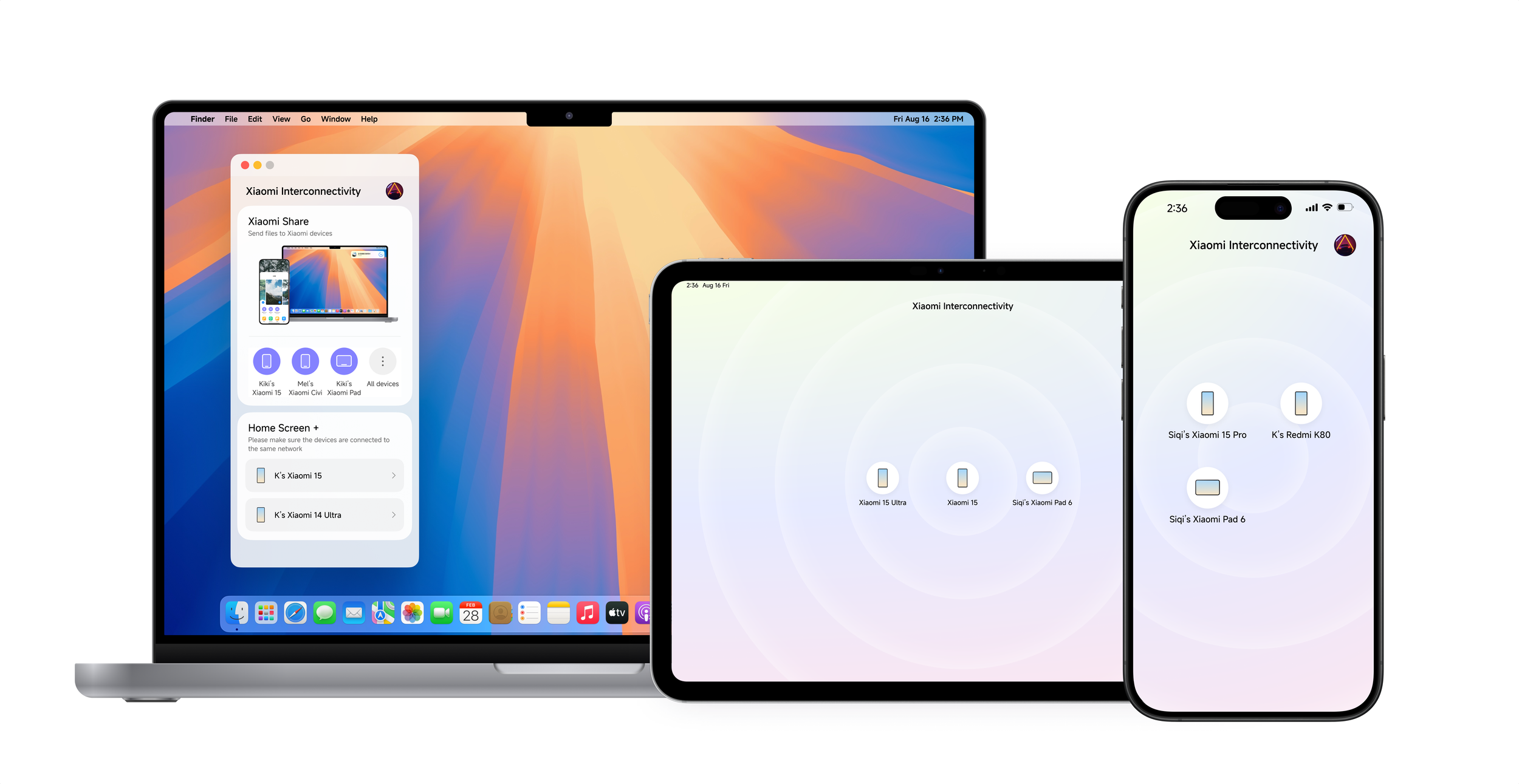
Xiaomi Interconnectivity Service is an Apple application designed for users who own both Xiaomi and Apple devices, enabling seamless cross-device collaboration such as file transfer, cloud file access, screen mirroring, and notification handoff.
This case study demonstrates how, with the development of Version 2.0, the product is evolving from a lightweight connectivity utility into a cross-platform interconnectivity hub, supporting a broader range of devices, connection methods, and collaboration scenarios. The aim is to provide a smoother and more efficient experience for dual-ecosystem users, empowering them to work and share effortlessly across Xiaomi (Android) and Apple platforms.
Product goals for Version 2.0
The Key Design challenge
In Version 2.0, the product integrates a broader set of capabilities, which introduces a key design challenge:
📌
How to create a seamless experience when different features rely on different technical prerequisites?
Some feature has their own prerequisites and activation conditions. For instance, Xiaomi Share becomes available immediately when the App is ready, while Home Screen+—a mirroring and remote-control feature—requires the Apple device and Xiaomi device to be paired beforehand. These differences in technical prerequisites introduce additional design complexity, particularly in ensuring a seamless and consistent user experience.
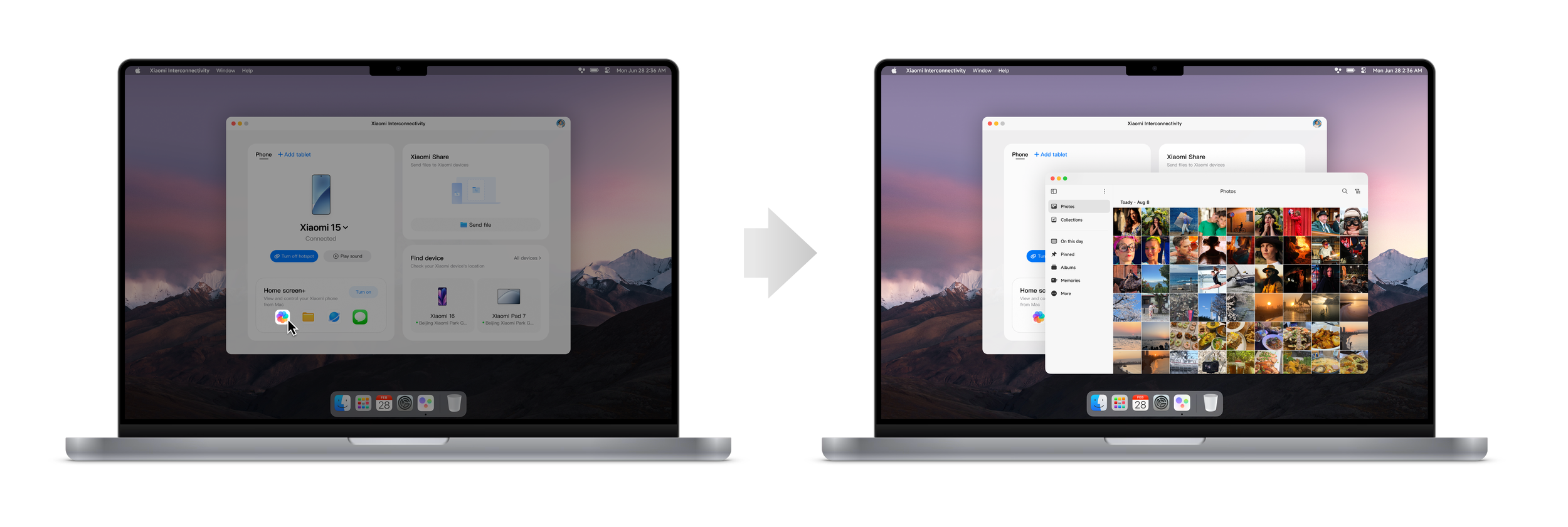
Run Xiaomi Apps on Apple devices
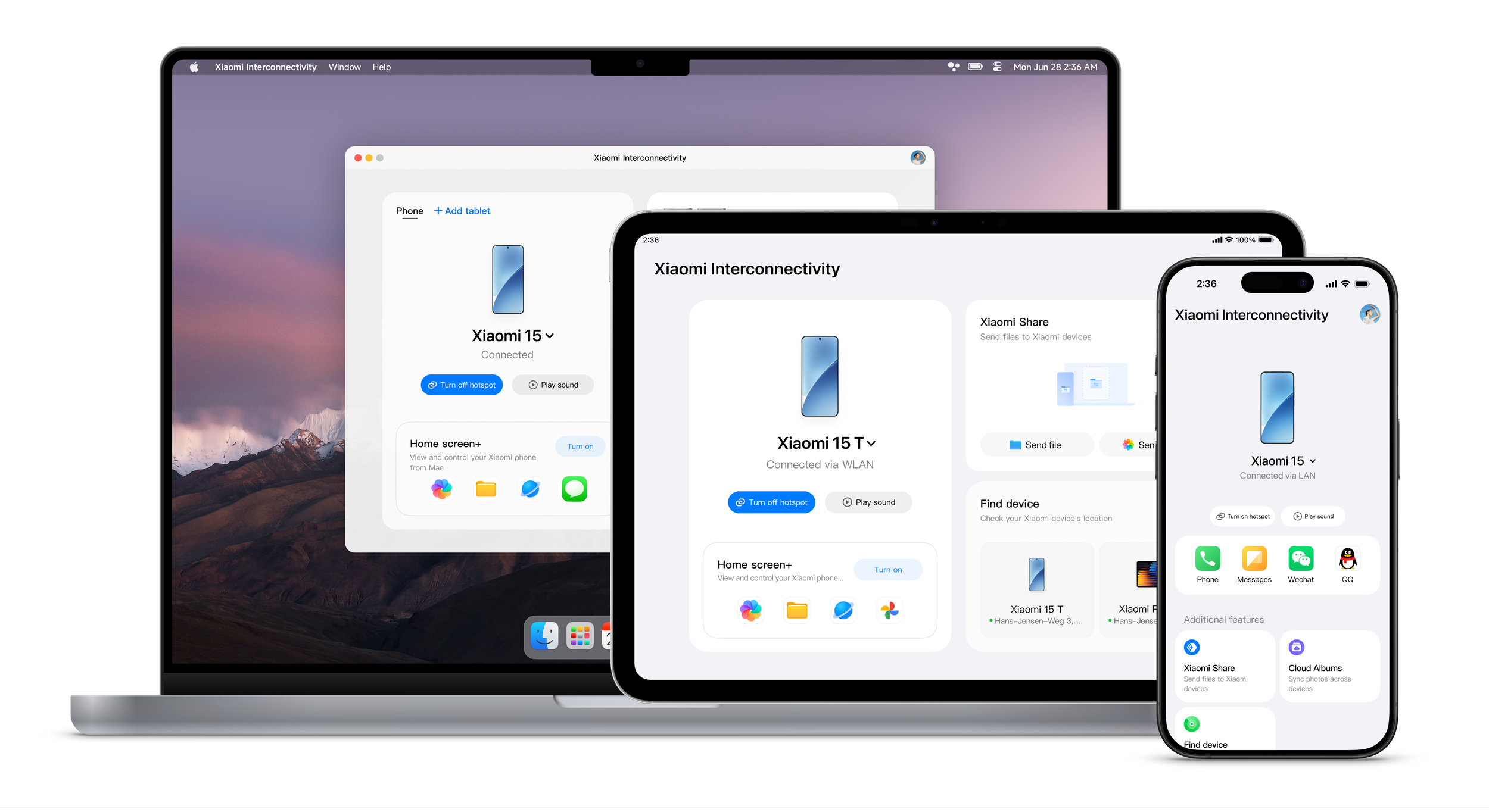
Use apps from your Xiaomi phone directly on a Mac, but with a layout specially designed for large-screen experiences.
On your Mac, drag files to the specified area to send them to Xiaomi devices.
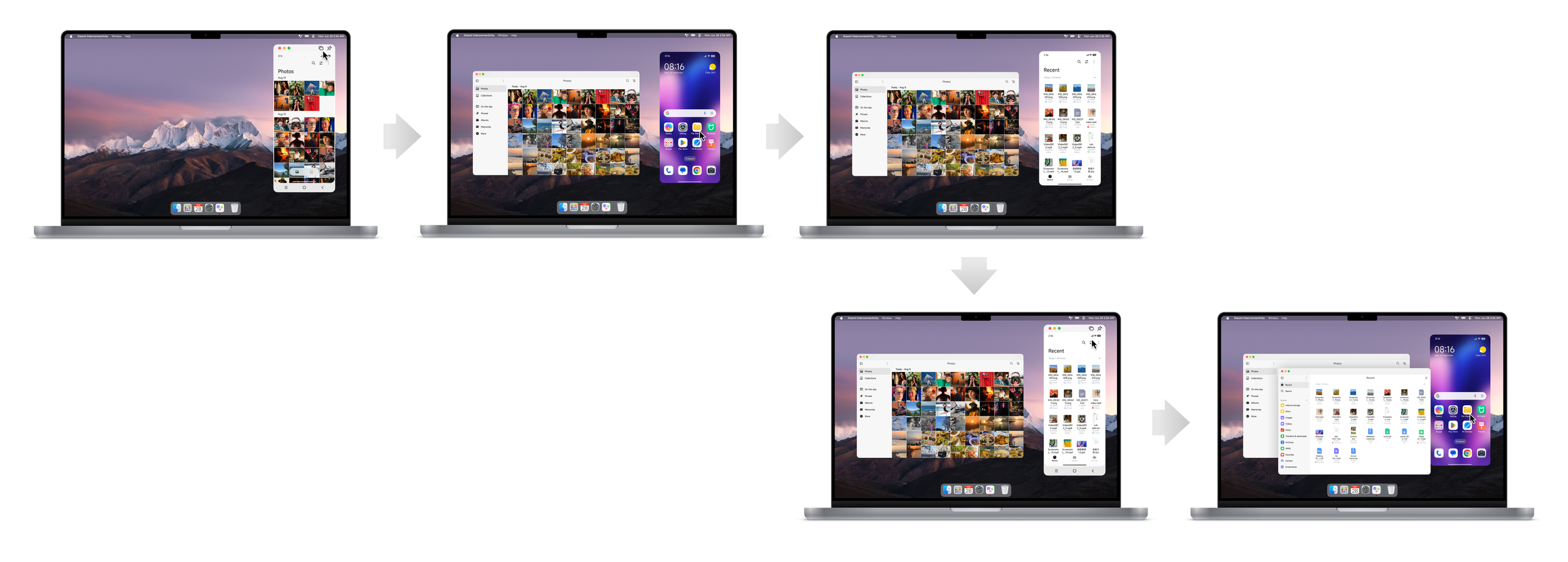
Seamless platform switching, uninterrupted multitasking
When using the mirroring feature, multiple separate windows can be opened from phone mirroring.
Impact
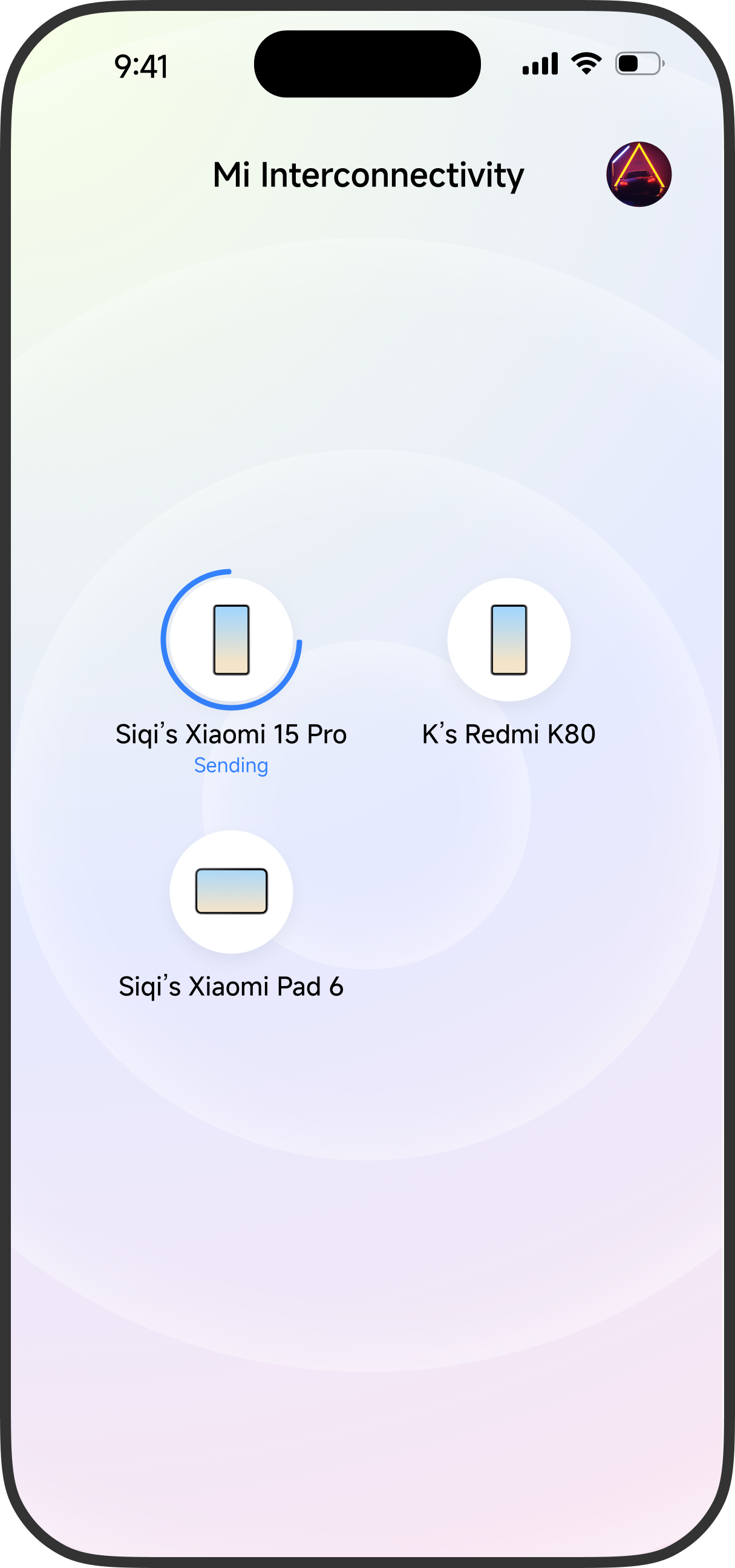
Sending in progress
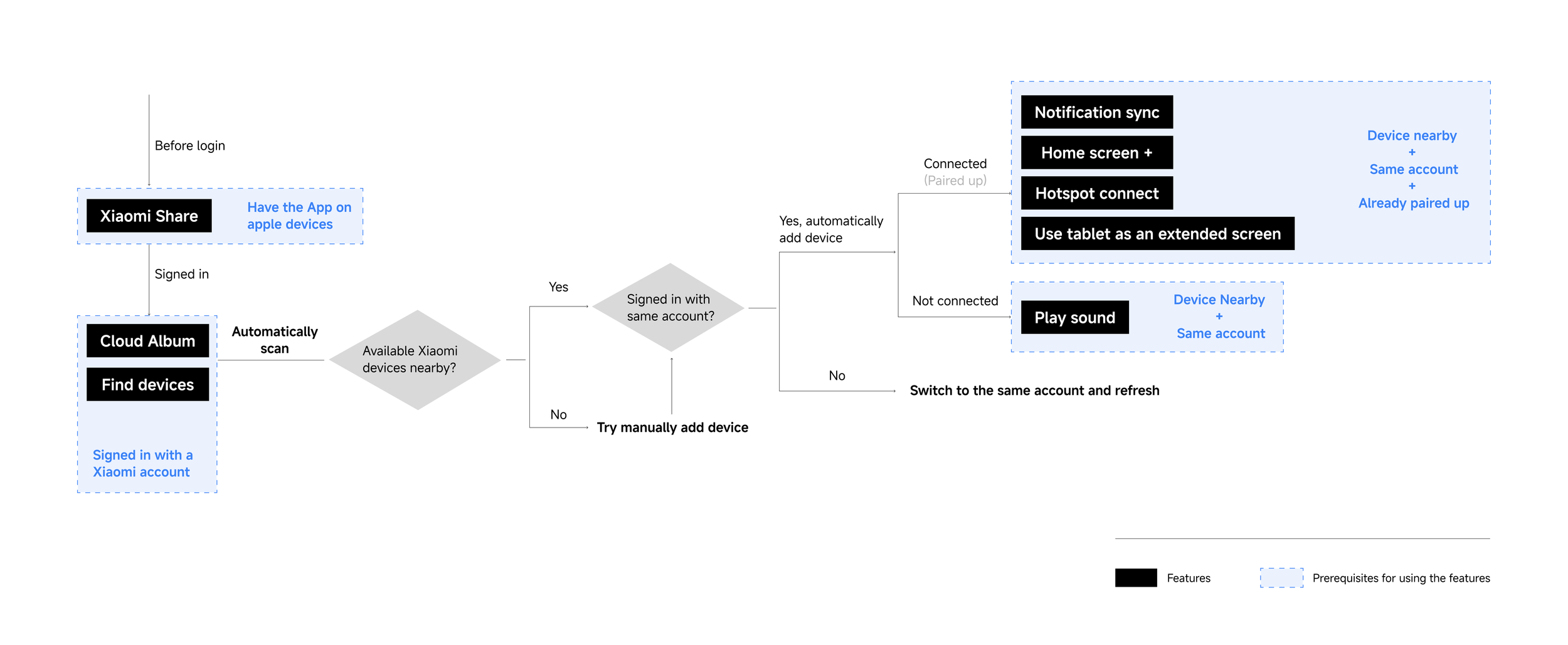
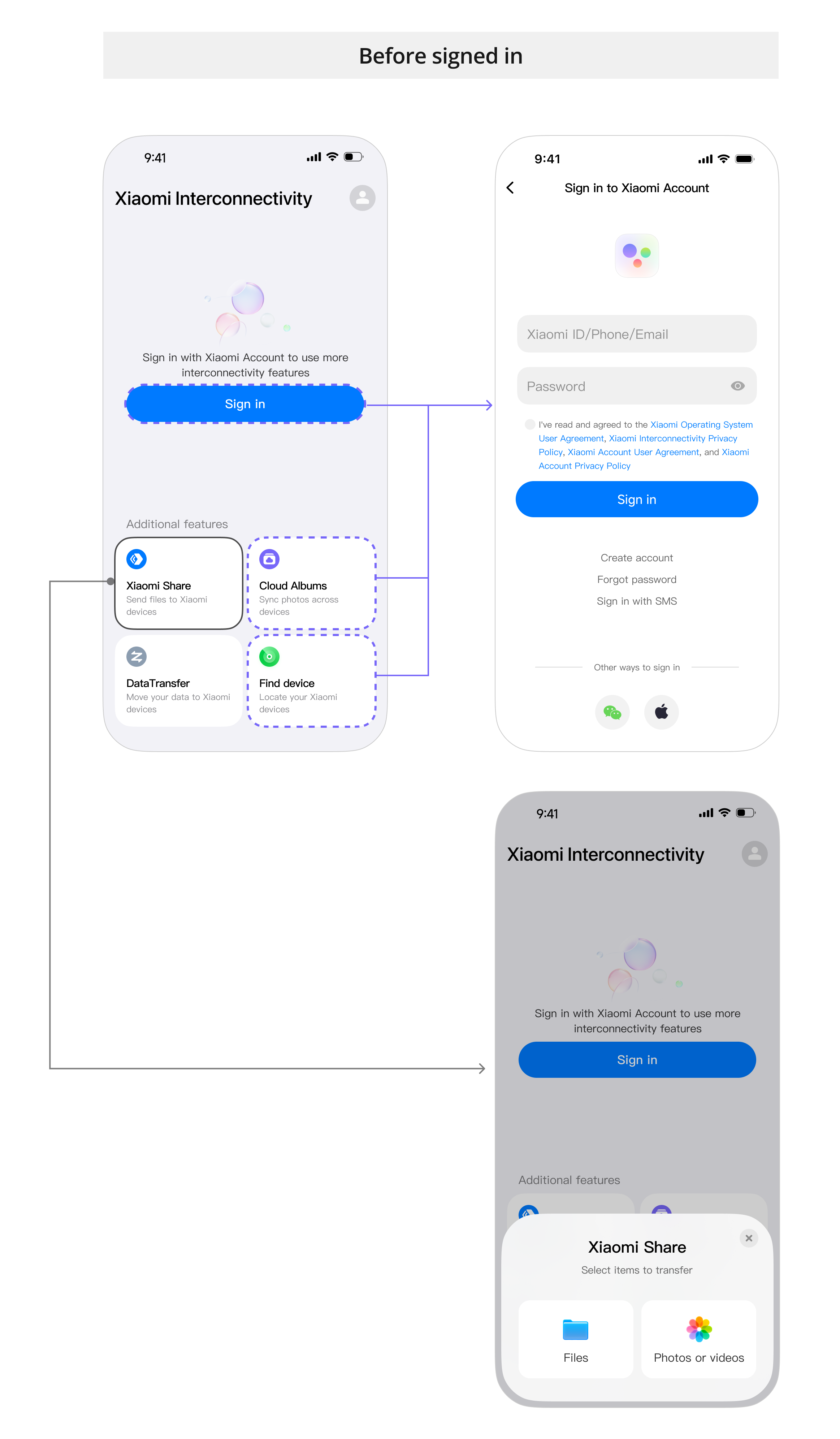
I mapped out the prerequisites required for each feature to determine where they should be placed within the user flow👆. However, from an exposure standpoint, we didn’t want users to see features only after all conditions were met. Instead, we surfaced key features earlier—for example, displaying some new features on the home screen even before sign-in. When users tap these features, we then guide them through the necessary sign-in process.
Other Design challenges
🚩 First-time experience
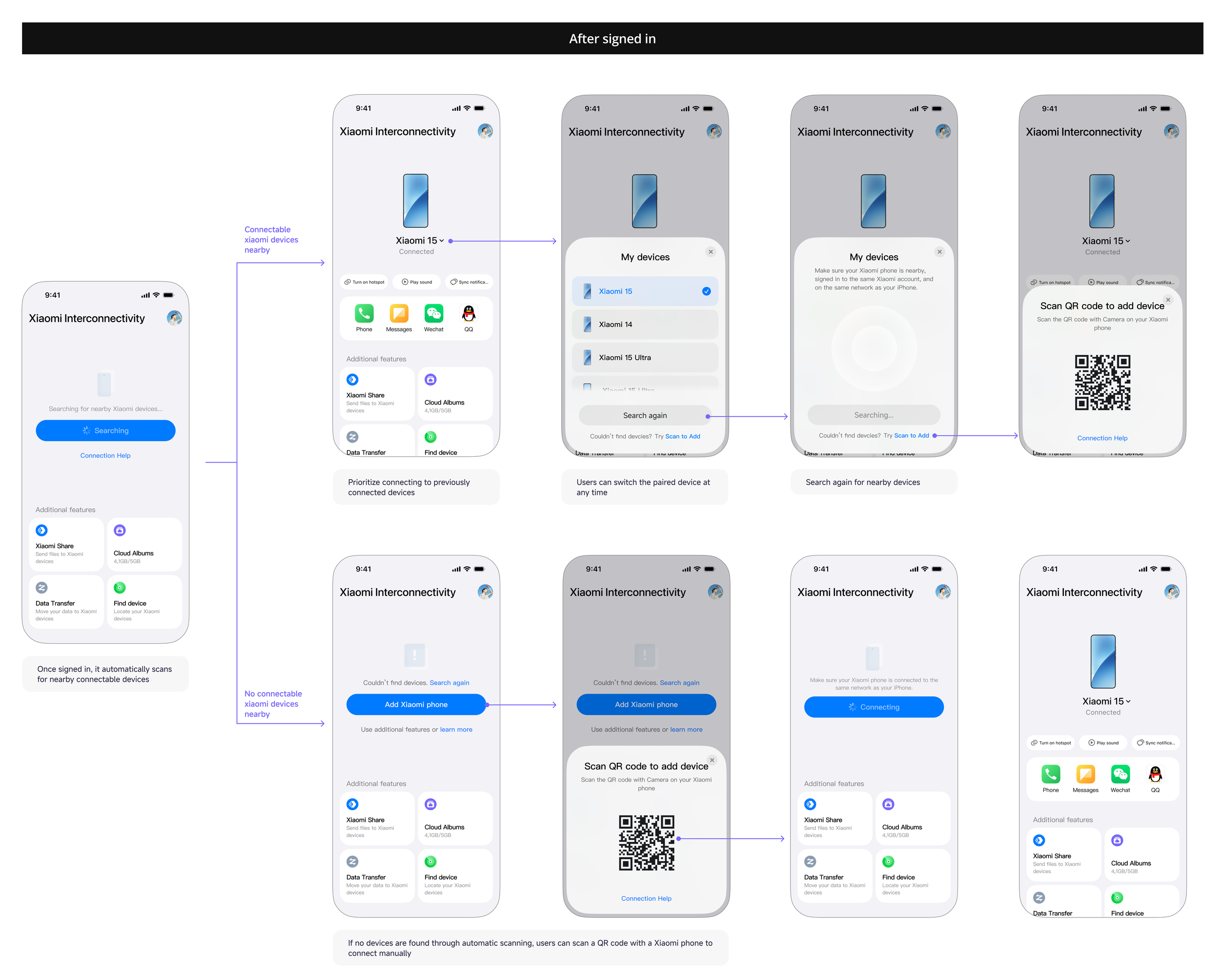
How might we create a frictionless, invisible connection flow for new users—one that feels effortless—while also ensuring clear feedback and rapid problem resolution when something goes wrong?
🚩 Returning users & task continuity
For users who have previously connected devices, how can we help them jump directly into the features they want to use, with minimal interaction cost? Additionally, when users want to switch devices mid-flow, how do we provide clarity, efficiency, and confidence throughout the process?
Extend the iOS solution to PadOS & MacOS
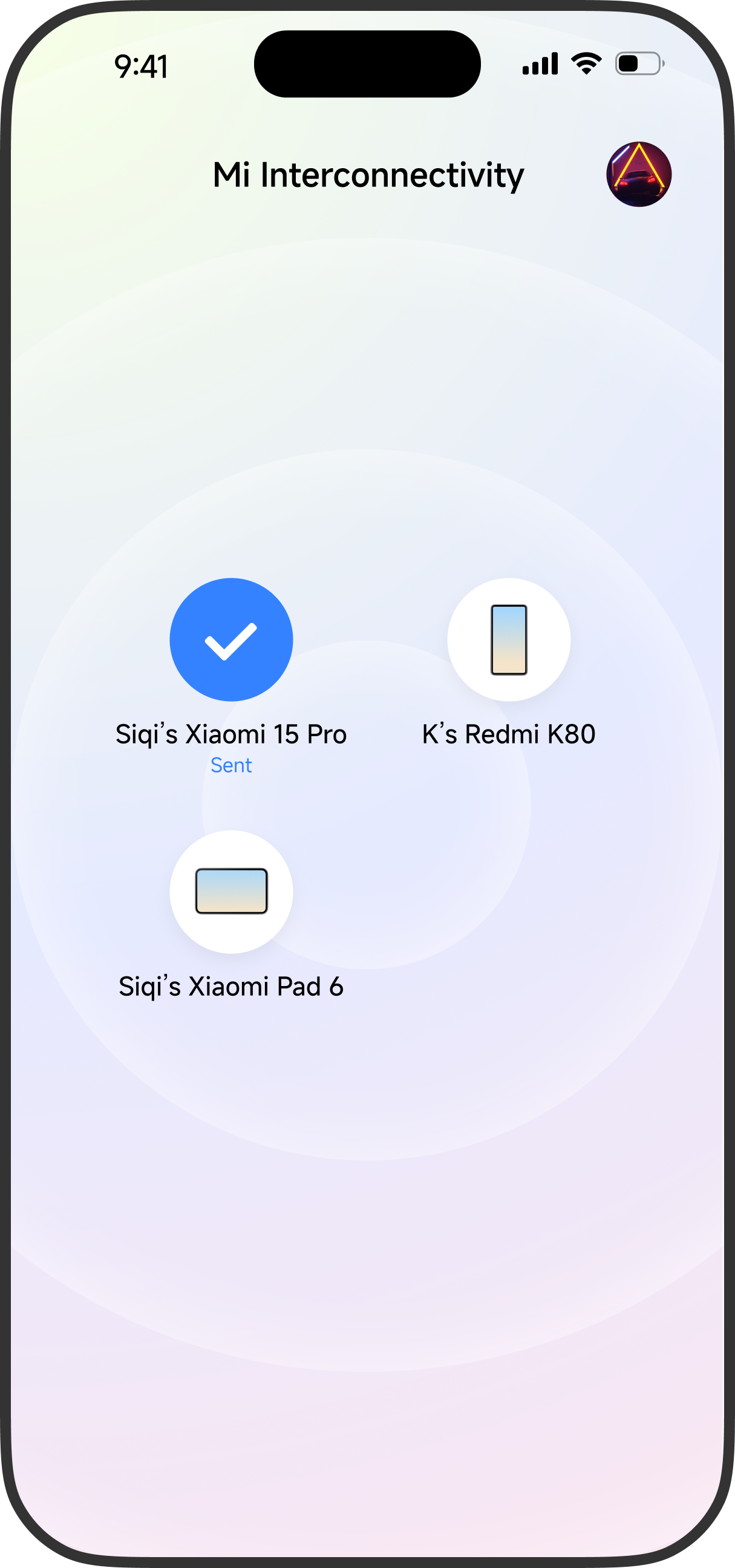
Sending completed
Version 1.0 launched in 2024
For the very first version, we went for a lightweight interconnectivity tool centered around “Xiaomi Share” as the core feature.
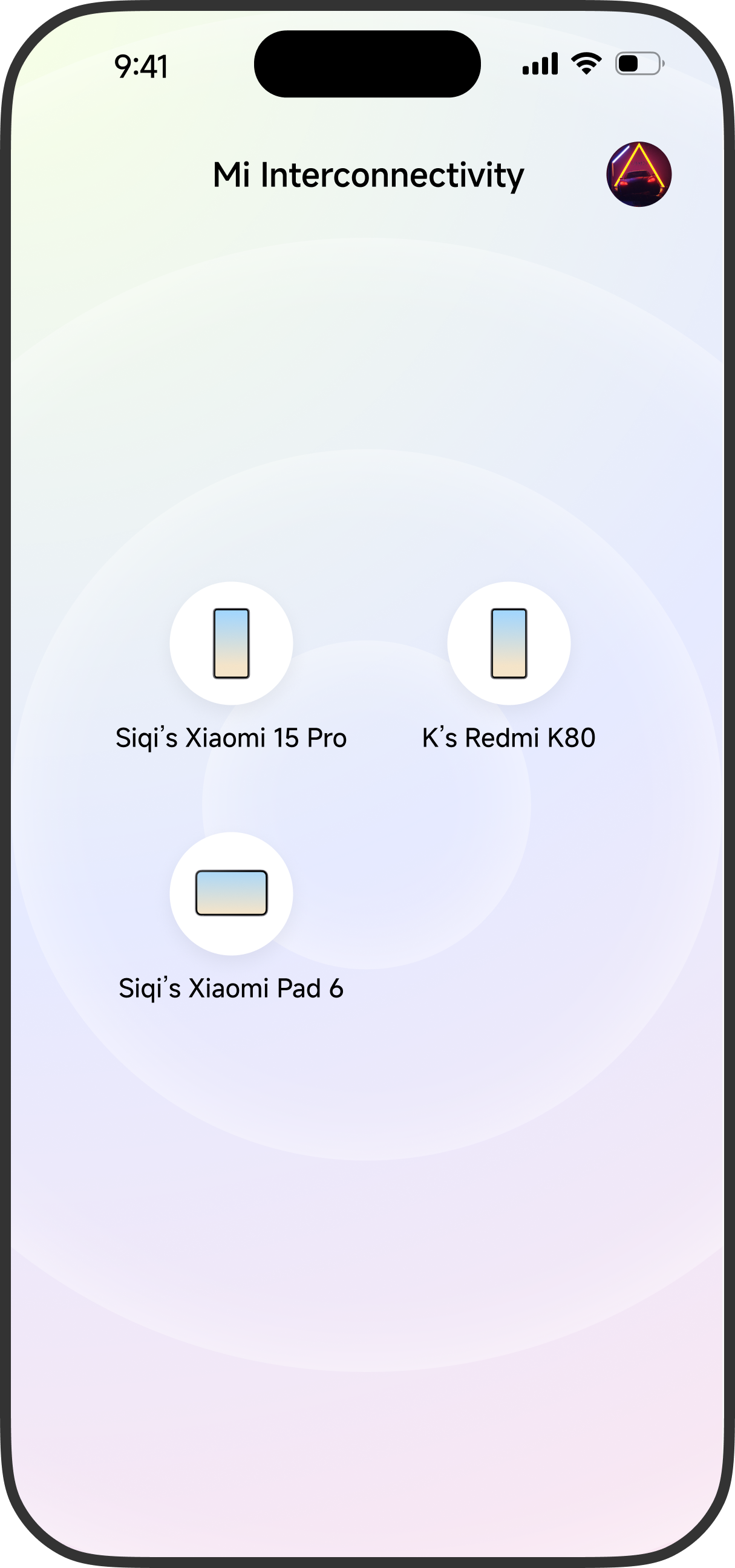
Scan devices nearby
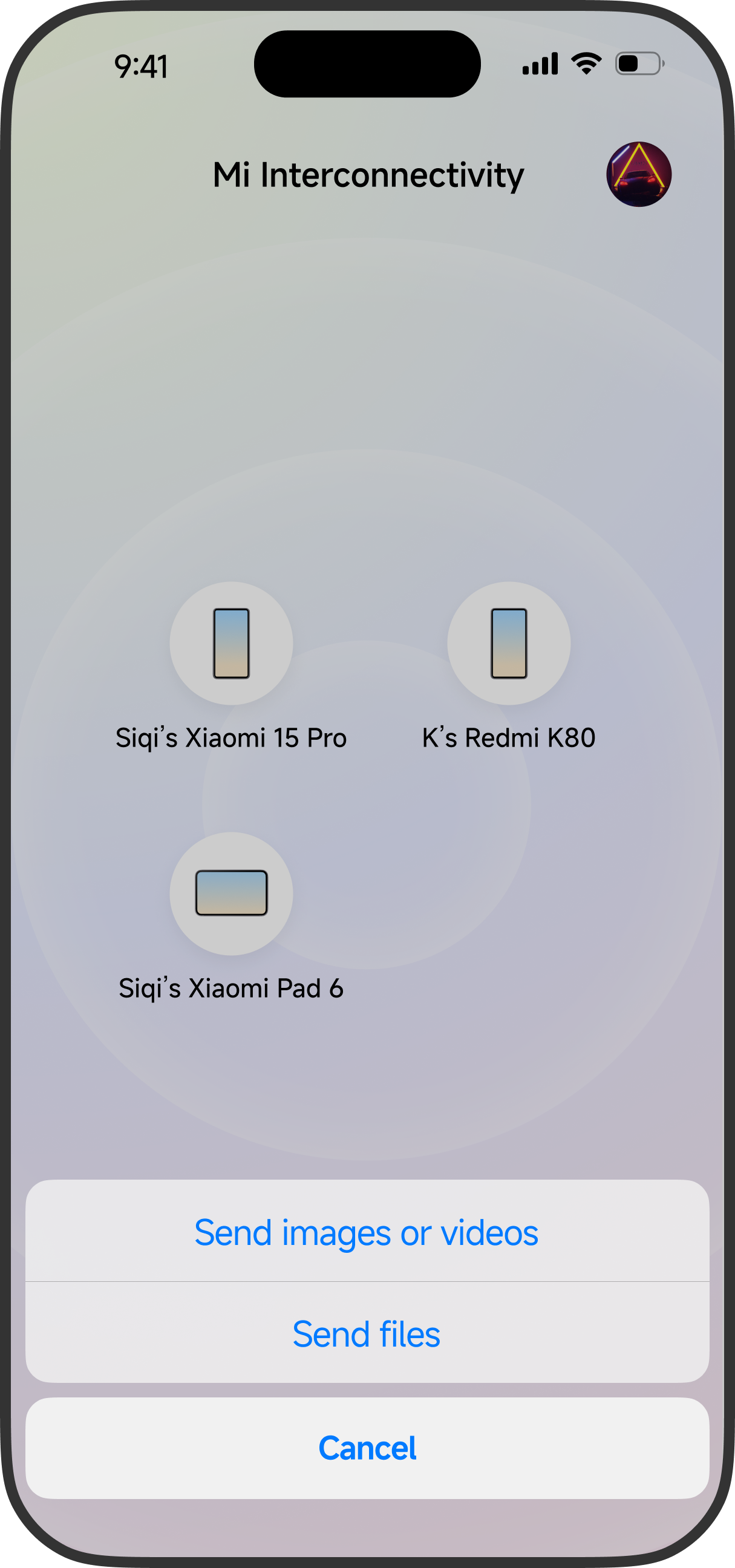
Options for sharing
Highly Rated features we designed for PadOS/MacOS
Drag to Send
V1.0
Simple Interconnectivity Tool
Goal Deliver essential cross-device connectivity and enable seamless file transfer through Xiaomi Share, solving immediate interoperability needs.
Strategy Focus on core use cases with a clean and intuitive experience to build user trust and adoption.
V2.0
Unified Cross-Device Connectivity Platform
Goal Support workflow transformation and structural evolution, enabling substantial feature expansion across devices.
Strategy Establish a unified architecture and consistent design patterns to integrate diverse capabilities and improve cross-device continuity.
V3.0
Cross-Platform Collaboration & Lightweight Productivity Cloud Platform
Goal Meet emerging needs for lightweight productivity and evolve toward an integrated collaboration ecosystem.
Strategy Build a clear and scalable information architecture to accelerate feature growth and maximize long-term design investment.